Throughout history, people have sought ways to better understand themselves, navigate uncertainty, and connect with something greater than their everyday awareness. Across cultures and traditions, a wide variety of divination tools have emerged to help facilitate this process of reflection, intuition, and insight.
From tarot cards and runes to pendulums and astrology, divination practices have endured for centuries—not because they provide all the answers, but because they invite us to ask meaningful questions.
At this month's Spill the TEA (Truth, Energy & Alignment) gathering, we explored several popular divination tools, how they're used, and what they can teach us about ourselves.
What is Divination?
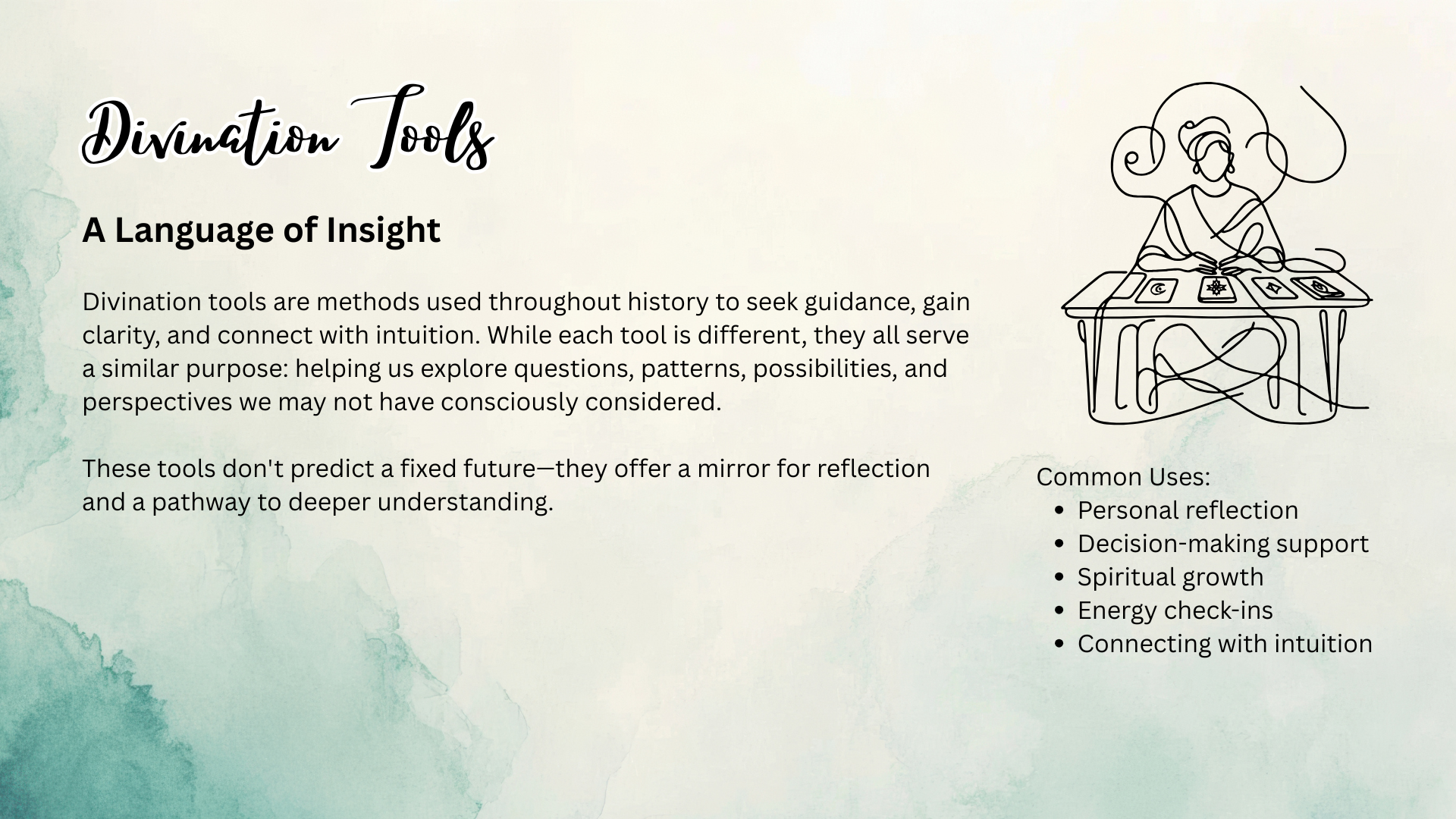
At its core, divination is the practice of seeking insight, guidance, or understanding through symbolic systems, intuitive interpretation, or observation of patterns. While different traditions approach divination in different ways, many practitioners view these tools as a means of accessing intuition, encouraging self-reflection, and exploring possibilities.
Rather than predicting a fixed future, divination often serves as a mirror—helping us see situations from a new perspective and become more aware of our own thoughts, feelings, and inner wisdom.
Tarot Cards: A Journey Through Symbolism
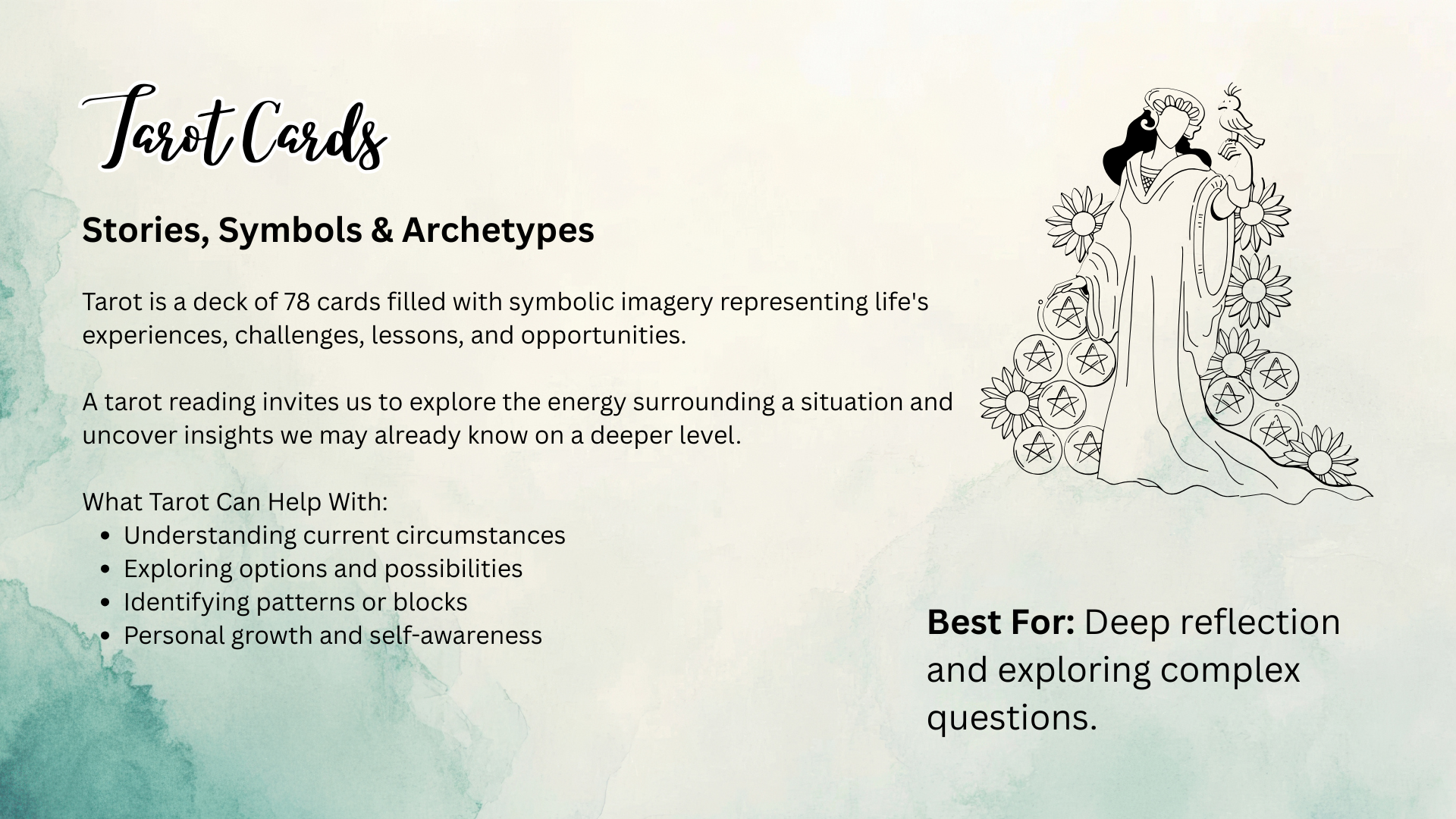
One of the most recognized divination tools is the tarot deck. Consisting of 78 cards rich with imagery and archetypal themes, tarot invites us to explore the stories unfolding in our lives.
Each card carries layers of symbolism that can spark reflection and reveal patterns we may not have consciously recognized. Tarot readings are often used to gain clarity around relationships, career decisions, personal growth, and life's transitions.
Many people are surprised to discover that tarot isn't necessarily about fortune-telling—it's often more about understanding the present moment and the choices available to us.
Oracle Cards: Accessible and Intuitive
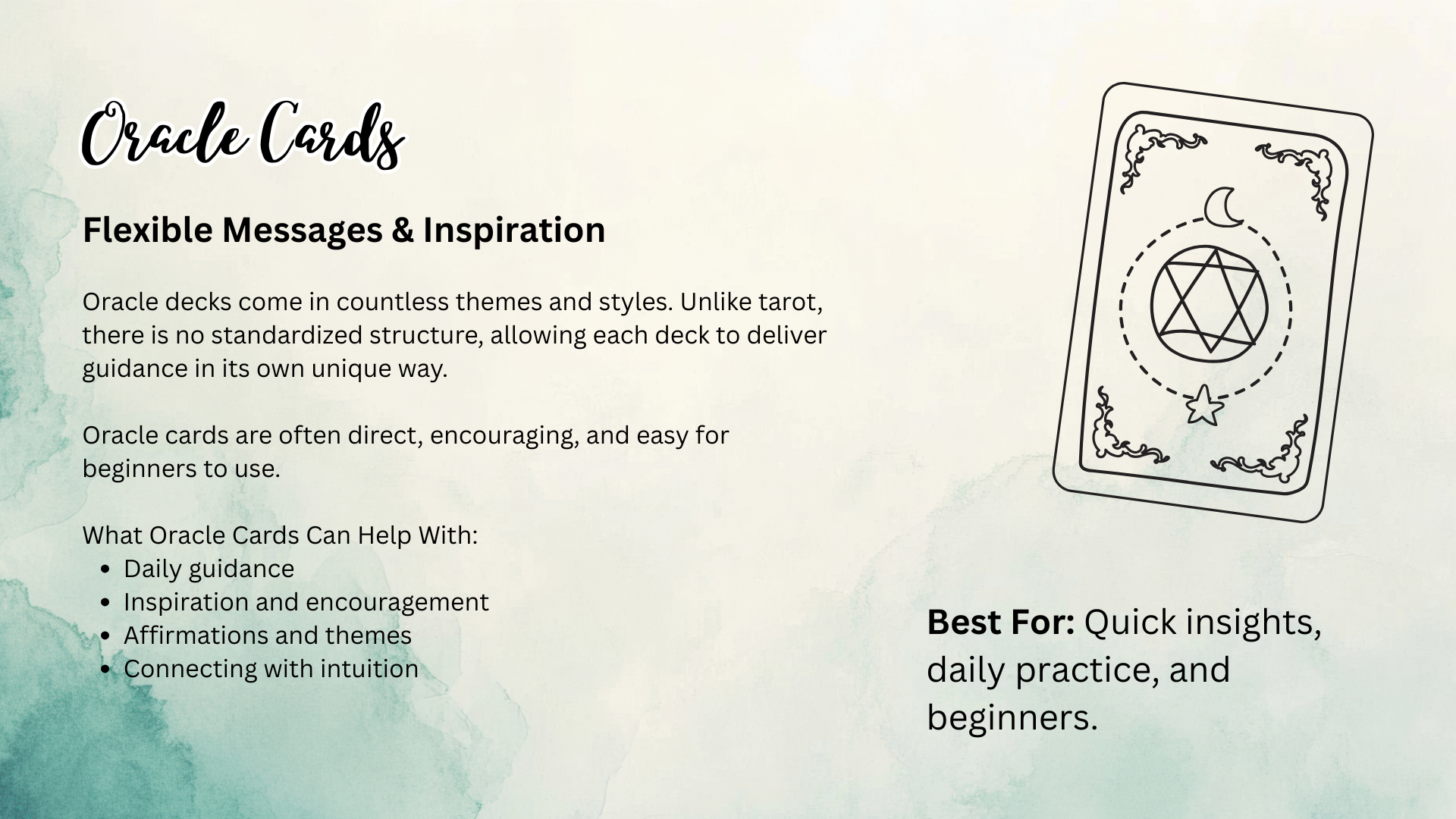
Oracle cards have become increasingly popular in recent years due to their flexibility and accessibility. Unlike tarot, oracle decks do not follow a standardized structure. Each deck is created around a unique theme, message, or philosophy.
Some oracle decks focus on self-care, others on spiritual growth, nature, affirmations, or animal wisdom. Because of their straightforward messages, oracle cards are often a welcoming entry point for those new to divination.
A daily oracle card pull can serve as a moment of reflection, inspiration, or intention-setting.
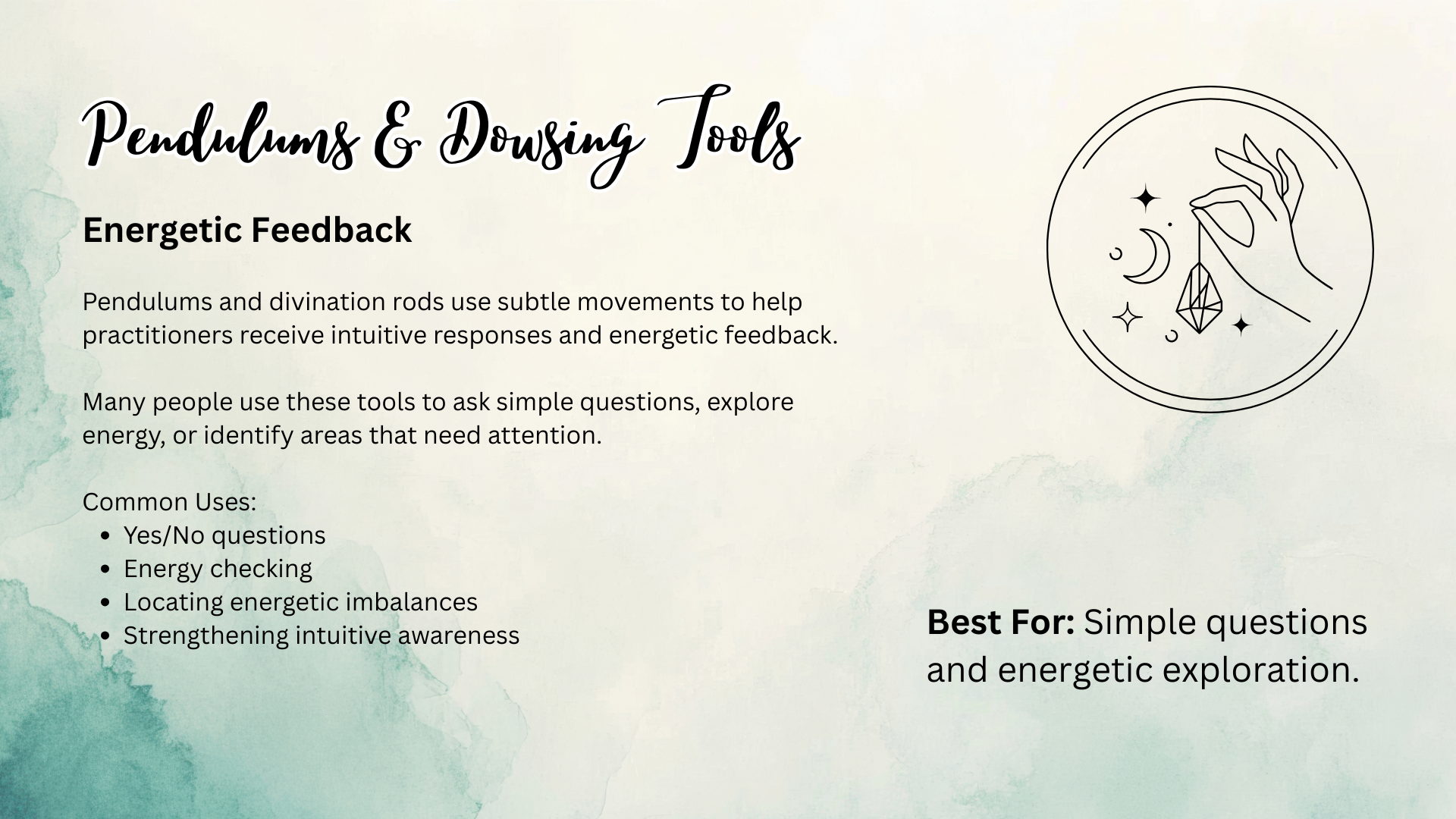
Pendulums and Dousing Rods: Asking Direct Questions
Pendulums and dowsing rods work differently than card-based systems. These tools are often used to explore energetic responses to specific questions.
A pendulum typically consists of a weighted object suspended from a chain or cord. Practitioners ask a question and observe the pendulum's movement, which is interpreted according to an established system of responses.
Similarly, dousing rods have long been used in various traditions to detect subtle energies, locate water, or seek guidance.
Whether viewed through an energetic, intuitive, or symbolic lens, these tools encourage practitioners to slow down, focus their attention, and tune into subtle awareness.
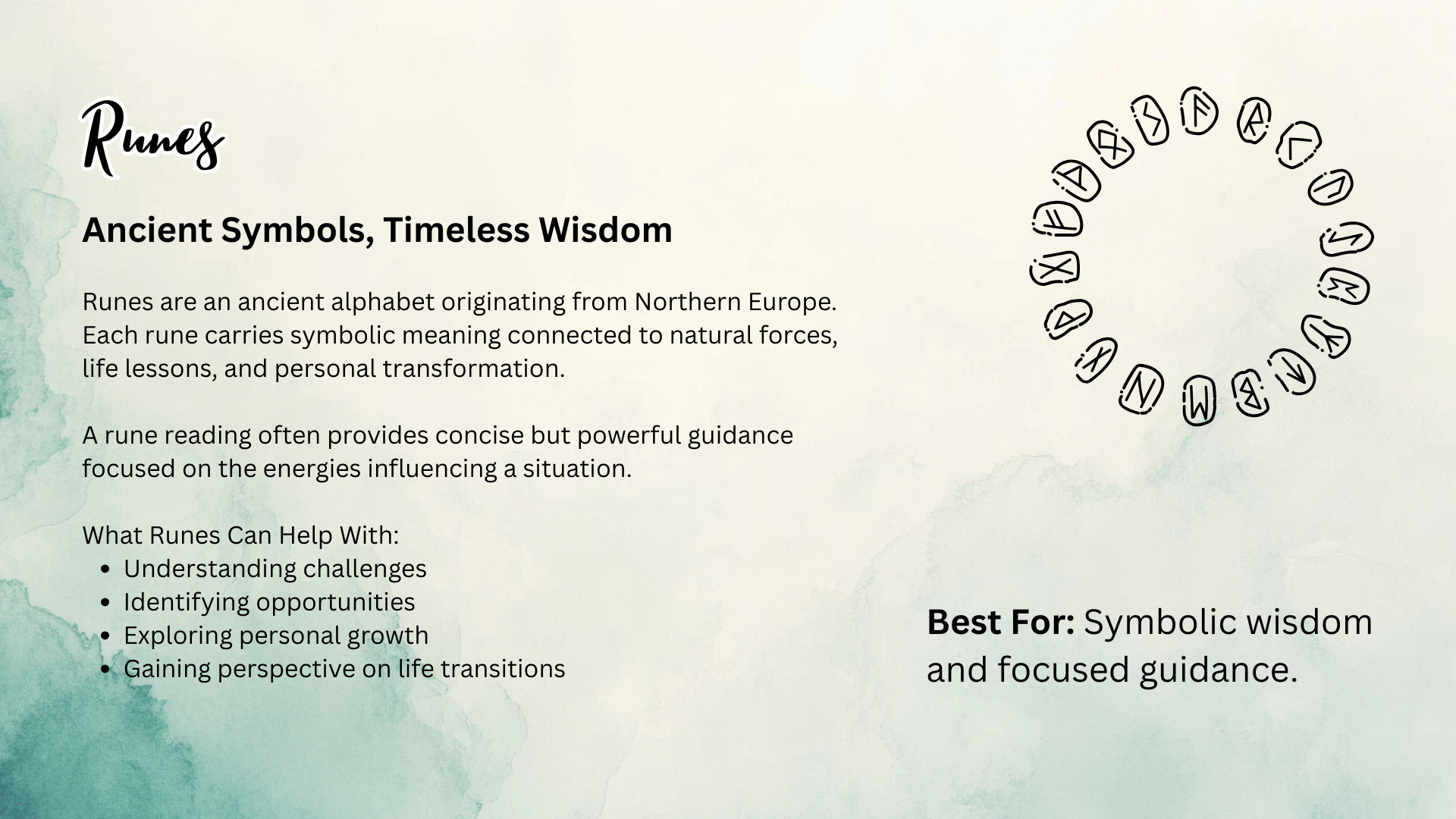
Runes: Ancient Symbols of Wisdom
Runes originate from ancient Northern European traditions and consist of a collection of symbols, each carrying unique meanings and associations.
A rune reading often provides concise yet powerful insights into the energies influencing a situation. Many people appreciate runes for their directness and connection to themes of nature, personal growth, resilience, and transformation.
Like tarot, runes offer an opportunity to reflect on challenges, opportunities, and the lessons unfolding within our lives.
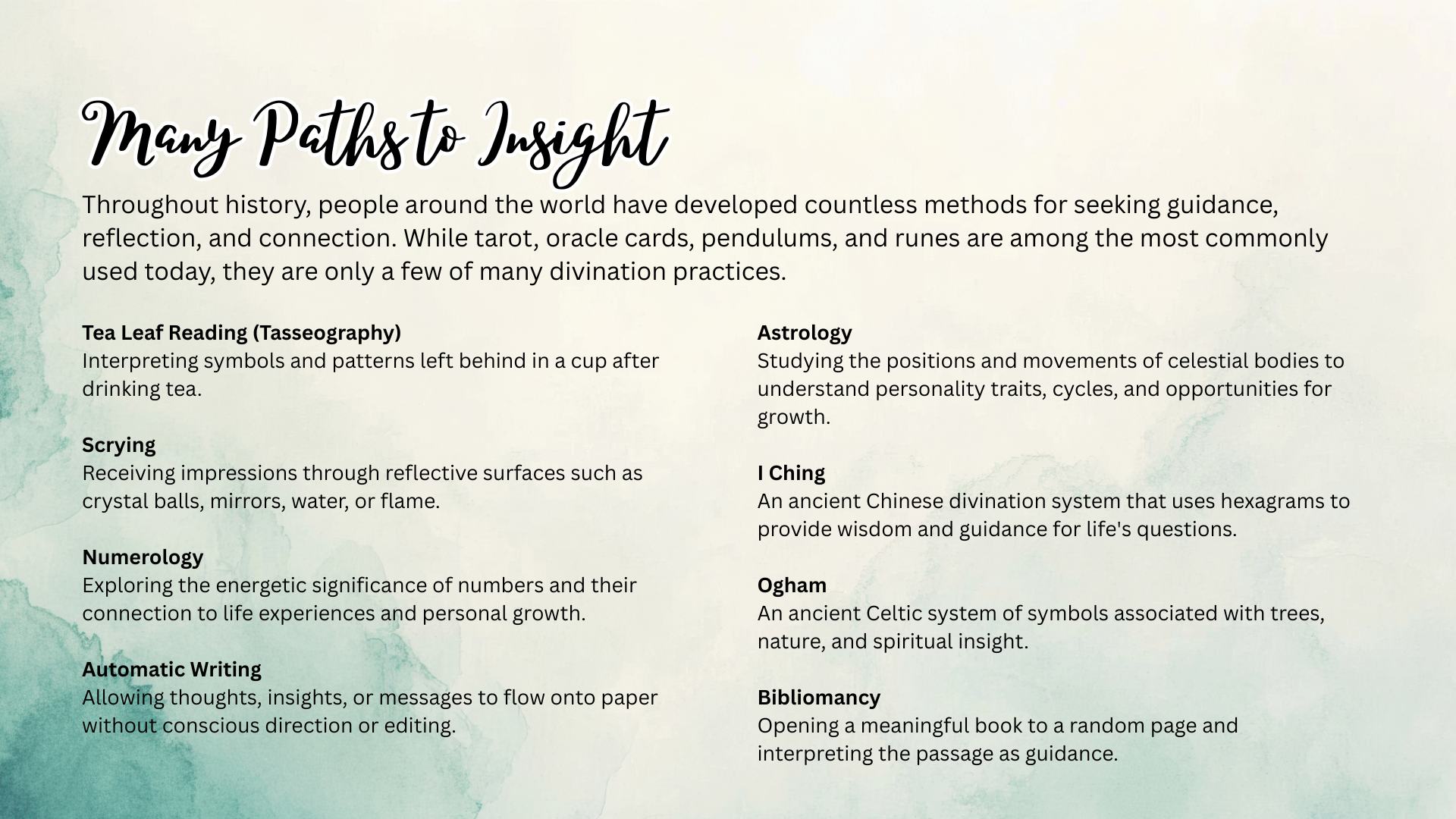
The Tool Is Not the Magic
One of the most important things to remember about divination is that the tool itself isn't the source of wisdom. Whether you're holding a tarot card, casting runes, or consulting an oracle deck, the real value comes from the reflection, awareness, and intuition that arise during the process.
These tools can help us pause, consider new perspectives, and uncover truths that may already exist within us.
In a world that often encourages us to move quickly and look outward for answers, divination offers an invitation to slow down and listen inward.